Skip to content

Blog

“El Tracte” – The handshake.

The label for our “El Tracte” bottles, and the back label telling the story of the wine.

“BELL CROS” is the label name for all the wines we produce. It means “BEAUTIFUL VALLEY” in Catalan. Each wine will have a name of its own to distinguish between the different wines. The first wine to be given a name, about 4,000 bottles of 100% Carinyena, and about shortly to be bottled. We are calling it “El Tracte”. That means “handshake” in Catalan and it was a natural choice for the name of this wine. Quite simply because it was agreed with a handshake, beside the signing of the official contract, that 4,000 kilos of grapes would be included in the purchase of the land from Joan and Maria. A proper Catalan handshake is a common way to seal an agreement in rural areas. Something that means more than a signature on a piece of paper.

Over the past few months, sketches of labels, corks, capsules and boxes have transformed into finished and precise designs. Everything has been ordered and now we are simply waiting for the Regulatory Council of DO Montsant (Regulador de la Denominación de Origen Montsant) to approve the wine. The Regulatory Council is the body that guarantees the quality of the wine and conducts the sensory evaluation to determine whether it is typical for the region of Montsant.

Sketches of capsules, corks and boxes have been transformed into precise designs.

Into the third season and still no wine to drink.

My critical fellow sommelier students at Vinkällan wine school in Gothenburg are sampling the first Bell Cros wine.

We’re really busy preparing for the third season and none of our wine is ready to drink yet. But it soon will be…..

The purchase of our first piece of land in 2017 included some 4,000 kg of Cariñena grapes. The wine made from this harvest is now ready to be bottled.

At last, the real fun starts. Knowing that we’ll soon be able to drink our own wine after waiting for 18 months brings a feeling of indescribable joy! And of course it’s the best wine we’ve ever tasted! Biased? Not us. Even if it were the worst wine we’d ever drunk we’d never admit it. So many emotions and tremendous happiness. We’ll tell you more about this wine once we’ve got it bottled.

We’re now in the thick of planning 2019’s harvest, our third one. Three red wines and one white wine from the 2018 harvest are now maturing. To be able to offer a complete selection, we’ll be expanding our product range with another 2 or 3 sorts of wine. The characteristics of our wines will be freshness and elegance. They have three levels of quality. The working names we’ve given these levels are “easy to drink”, “pair with meals” and “prestige”.

It is far more difficult than I had ever imagined to come up with names for the different wines. We haven’t settled on any names yet but are still calling them “happy wine”, “old wine” and various other names. The names will come, they have to come, and we’re working hard with our advertising agency to find names that have an association with our vineyard. Ideally they will be Catalan names that are easy for English speakers to pronounce… not that simple.

And we’ll shortly be launching a new website too. It’s all go………

They give it the thumbs up.
Our wine mentor Miguel was one of the first people with whom we wanted to share the pleasure of drinking our first bottle of Bell Cros.
Smiles and laughter on Xavi’s deck. It’s the season for calçots, a type of grilled onion that is dipped in a Romesco salsa sauce and then devoured. Bibs on, it gets messy.
Brainstorming with Anna from the ad agency to come up with names for our wines. There’s always a good ambience and a tasty tipple when working with wines.
A case filled with well-wrapped treasures (our new wine) unpacked back in Sweden.

Soil restoration – a shitty job.

These are the beauties that we’ll be planting for future yields.

We’ve taken this on as a long-term project. We’re not doing it to earn money fast. We’re doing it because it is fun and we want to create something sustainable and long-lasting.

For a year now we’ve been working hard to restore the ground to its original state and have been adding the essential components that have been leached out of the soil over the years. 75,000 kilos of micro-organisms (animal shit) have gone into the ground this year. It’s hard work and it’s not cheap. A real shitty job. And we’ve also stopped using chemical pesticides completely. It will now take two more years before our vineyard is fully organic and we’ll be able to use the EU symbol for organically-grown products. Most of the vines on our land are between 30 and 80 years old. Just like humans, vines don’t live for ever. The older they get, the less they produce, but the quality of the grapes keeps on improving. So the question of when to replace the old vines is a financial one. In some parts of our vineyard, the vines grow sparsely in some areas and are not producing enough. We’ve now cleared a total of 1 hectare of Cariñena. It’s heart wrenching removing these old vines that have been tended by hard-working families for generations.

We started preparing for this last year and, after the harvest, cut branches off the stock vines that we had removed. These have been grafted onto American rootstocks that are resistant to the dreaded wine louse (Phylloxera). By using the canes from our own stock vines, we are preserving the genetics of the vines and the vineyard’s history. This intensive period of replanting has now ended and we’re taking care of our new babies so that they produce good yields in 3 years, at the earliest, as the regulations stipulate. As with anything to do with wine, all you can do is wait……..

Rooting up the old vines that are past their best.
New grafted Cariñena shoots
American roots, resistant to wine louse (Phylloxera).
It takes many hands to get these small beauties in the ground.
Baltasar makes sure it is all done properly, straight and orderly.
Lunch!

Bureaucracy, simply accept it.

Upbeat and cheerful before yet another of our “favourite meetings” with the public notary.

Something that we have learned, apart from making wine, is that Sweden and Spain differ greatly when it comes to contact with authorities, institutions, banks and so on. We love Spain and its people, but we don’t love everything. I feel I have to mention the bureaucratic red tape and official formalities that we have encountered in Spain.

Since the start of our wine adventure just over a year ago, we’ve come into contact with various authorities and institutions, for example, when we set up our Spanish company, opened bank accounts, purchased land (6 acquisitions in all), applied for building permission, various permits and agricultural subsidies, etc. In general, we’ve learned (been forced to learn) that a lawyer is involved in everything and that all matters eventually end up on the desk of the public notary. It takes a very long time to get anything done and a great deal of patience is required. Although patience is not my strongest attribute, I’m learning slowly but surely that you simply have to accept that this is how things are done.

We’re used to the Swedish way of doing business, registering everything electronically and getting matters sorted quickly and simply with a few clicks. No big deal. There are no real databases in Spain (except for the tax authorities), which means that everything has to be examined manually by a lawyer and documented on paper that has to be signed. We’ve had to familiarise ourselves again with bank cheques for the purchase of land, instead of transferring the money electronically.

I could list many examples but have decided not to go into detail. Setting up a business in Spain is very complicated and expensive compared with Sweden. Lawyers, notaries, applications, cheques and so on are not free.

But in spite of all the red tape, we love Spain, its people and what we are doing. I have great respect for entrepreneurs who set up businesses in Spain. We have started and managed many companies in Sweden. The authorities and institutions support, encourage and assist new start-ups in Sweden, helping them to get going until they have learned the essentials and got their business up and running.

Finally, we have great admiration for all business owners in Spain. You deserve a pat on the back!

The wine – beyond expectations!

Little did we think that one day we would be drinking our own wine straight from the barrel!!

Both the alcoholic fermentation and the malolactic fermentation have finished now. The malolactic fermentation converts malic acid into lactic acid, giving the wine a smoother, more rounded body. We suddenly felt that things took a serious turn. So far, we’d been working on the idea of making a wine. Now it was time to see if our idea of buying a vineyard was such a good one. The wine inside the steel vats and the barrels may not be ready for consumption yet, but it almost resembles the finished product. Some of the four to six different kinds of wine that we’ll begin producing will be ready for bottling and drinking in about six months. Others won’t be ready for another two years or so. This harvest yielded some 25,000 bottles in all.

Our winemaker Joan Asens, proudly presented 20 or so different samples that he had drawn from the tanks. We could see from the look in his eyes that he was very pleased with what we were about to taste. And he was right. The wines were beautifully fresh, crispy and aromatic. The low harvest yield this year, about 25% lower than average, has rewarded us with an excellent grape quality.

We rounded the sampling off in Swedish style with mulled wine (Glögg) and ginger cookies (pepparkakor), as is the custom at Christmas time in Sweden.

We’re delighted by what we’ve sampled. It bodes well for the future. It was a good idea, better than expected!

Joan and Baltasar were very satisfied and happy before the tasting had even begun.

Time to be critical. Nose deep in the glass.

Each wine we tasted could be sourced to one of the 17 areas that we have divided our vineyard into.

This is going well. Xavi has everything under control.

My name’s on one of the barrels. 🙂

Why make things easy for yourself?

We got a “house” into the bargain.

You could buy a vineyard as a going concern and simply enjoy it and the wines. You could also start from scratch, building up a vineyard step by step over the years until it is time to introduce and enjoy your own wine. We’ve chosen to take the slightly tougher, bumpier route. Why make things easy for yourself? For the simple reason that we think it’s more fun. We enjoy the process of creating something new, nurturing it along, watching it grow and develop into something concrete. Hopefully a place where we can be together with friends and just take pleasure in our own wine.

This is the sixth time in twelve months that we’ve acquired a piece of land. It is adjoining our land and comprises 2.6 hectares of Juan Salvador Vernet Peña, 1 hectare of Garnatxa vines, and olive trees on the rest. Our vineyard is now 24 hectares in size, 14 of which are planted with grapevines.

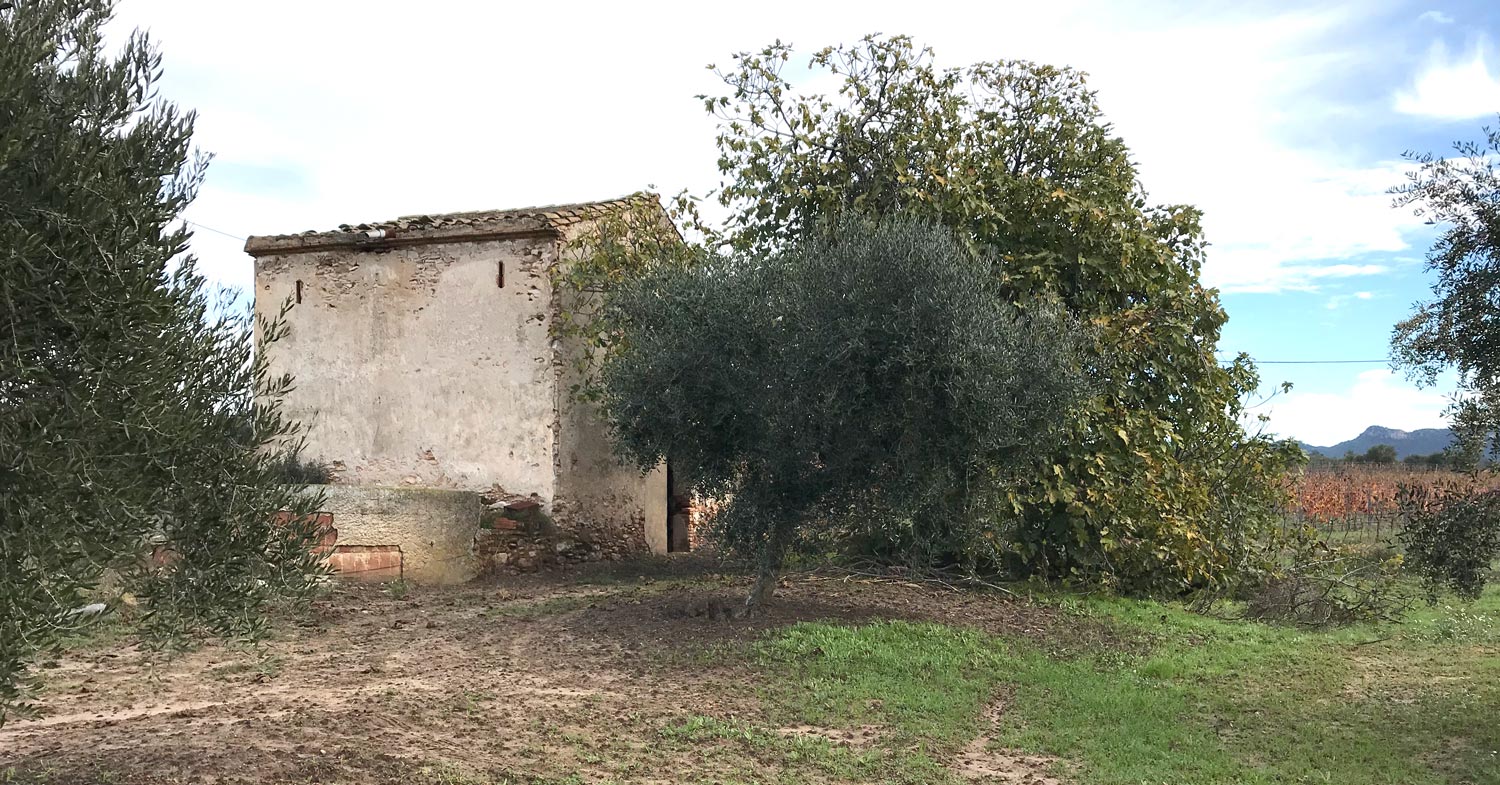
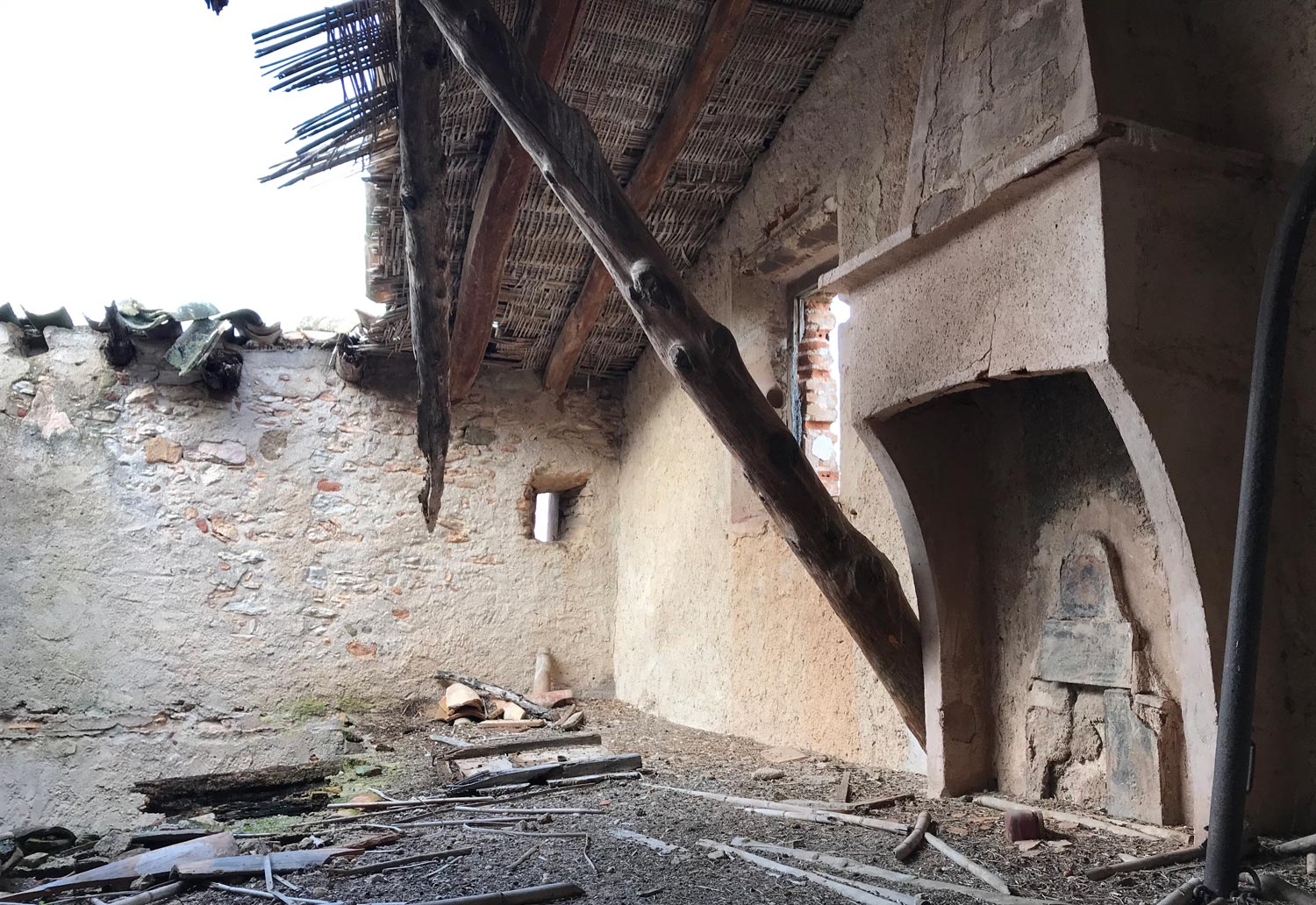
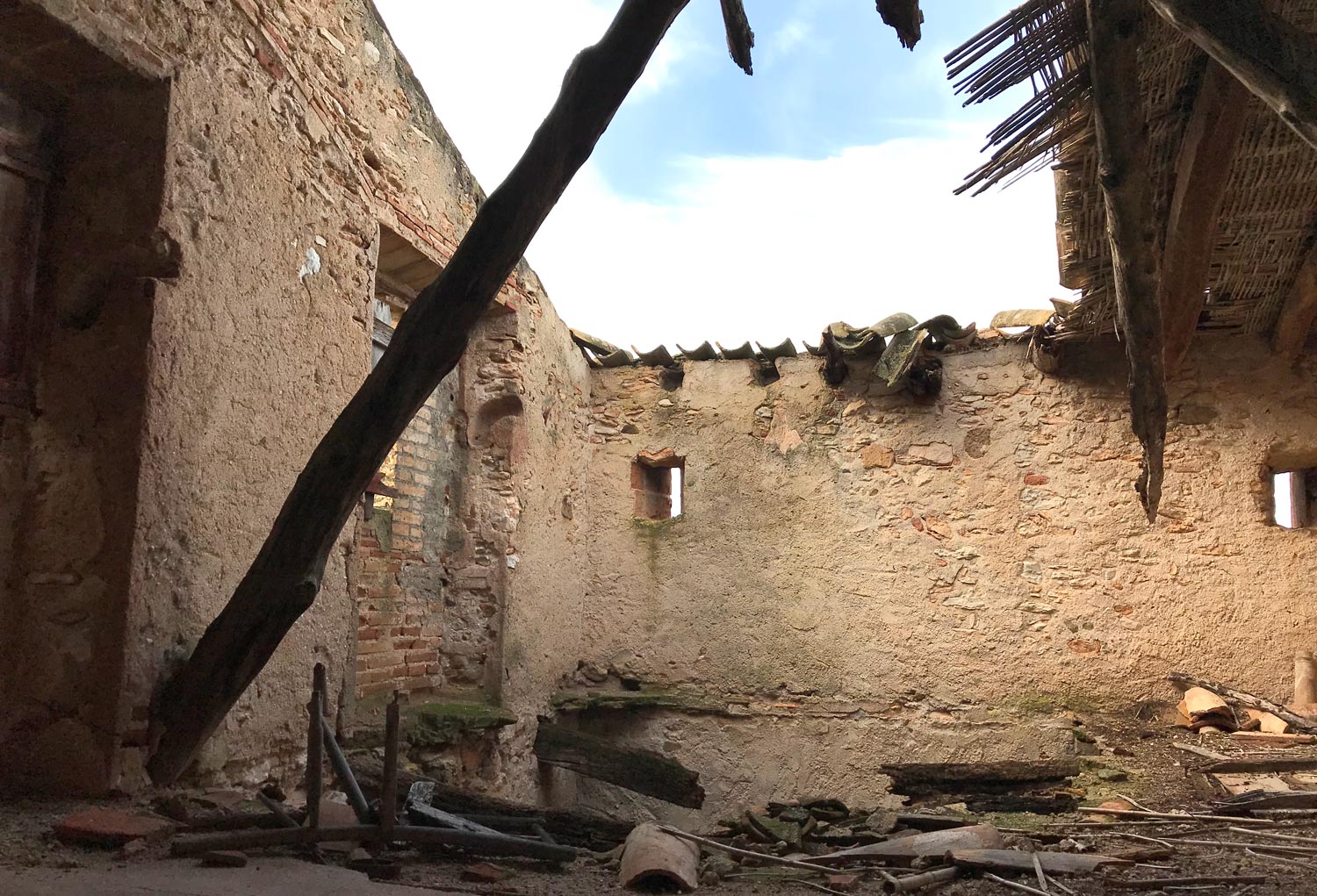
On the land we’ve acquired stands an old, run-down, two-storey house. We’ve no idea what we’re going to do with it, but our minds are already whirling with new ideas. Anyone have any good suggestions?

As commonly seen hereabouts, there are large trees close to the building providing shade from the sun.

This used to be a pleasant living room with an open fireplace.

Open to the skies too, for good ventilation.

Just to pop the tiles back on the roof, and the place is ready to move into. 🙂

Could do with a new door.

The sun doesn’t always shine. Ann wearing improvised boots.

The perfect place for a picnic

We are looking forward having our first picnic with this amazing view out over our vineyard

We are very happy that we’ve acquired a small piece of land, 1.6 hectares, from Miquel Lluis Nolla Aguila. The land borders our other land. Just a small part, 0.3 hectares, is planted with 25 year old Garnatxa grapes. The land is in principle just a terraced slope. Eventually we will plant grapes here, but the main reason for buying it is the amazing view over our vineyard. It’s the perfect place for picnic enjoying our wines together with good friends.

Happy and content…

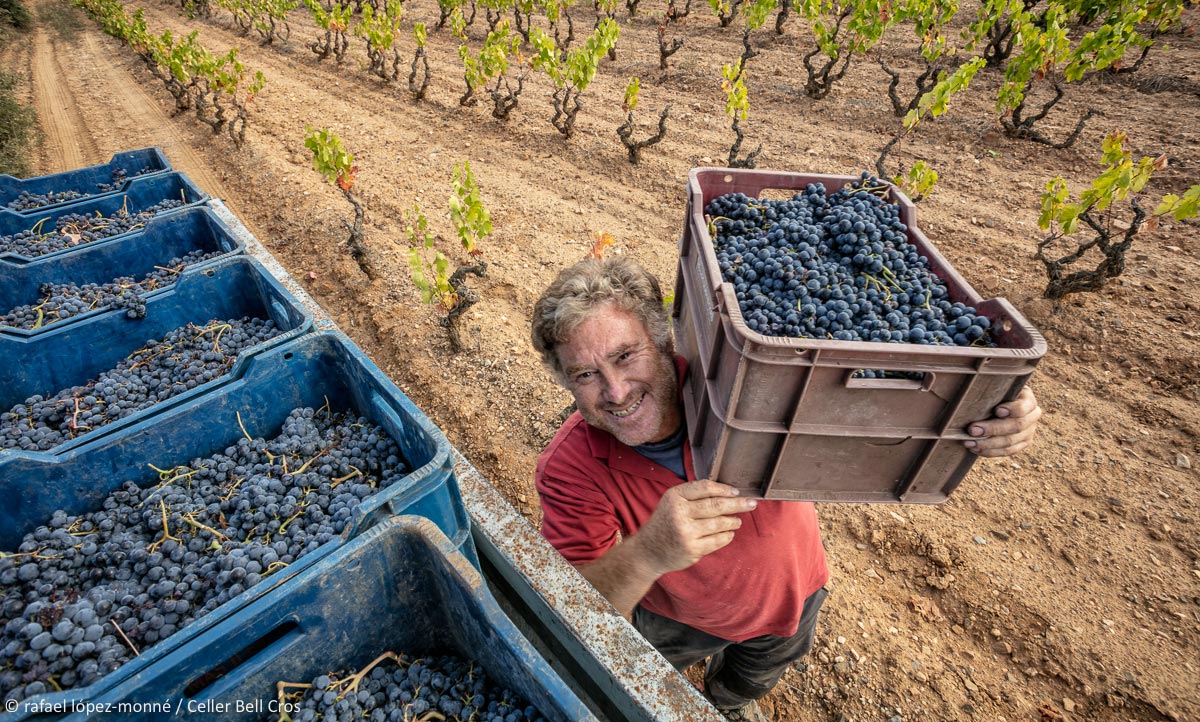
The grapes are all hand-picked.

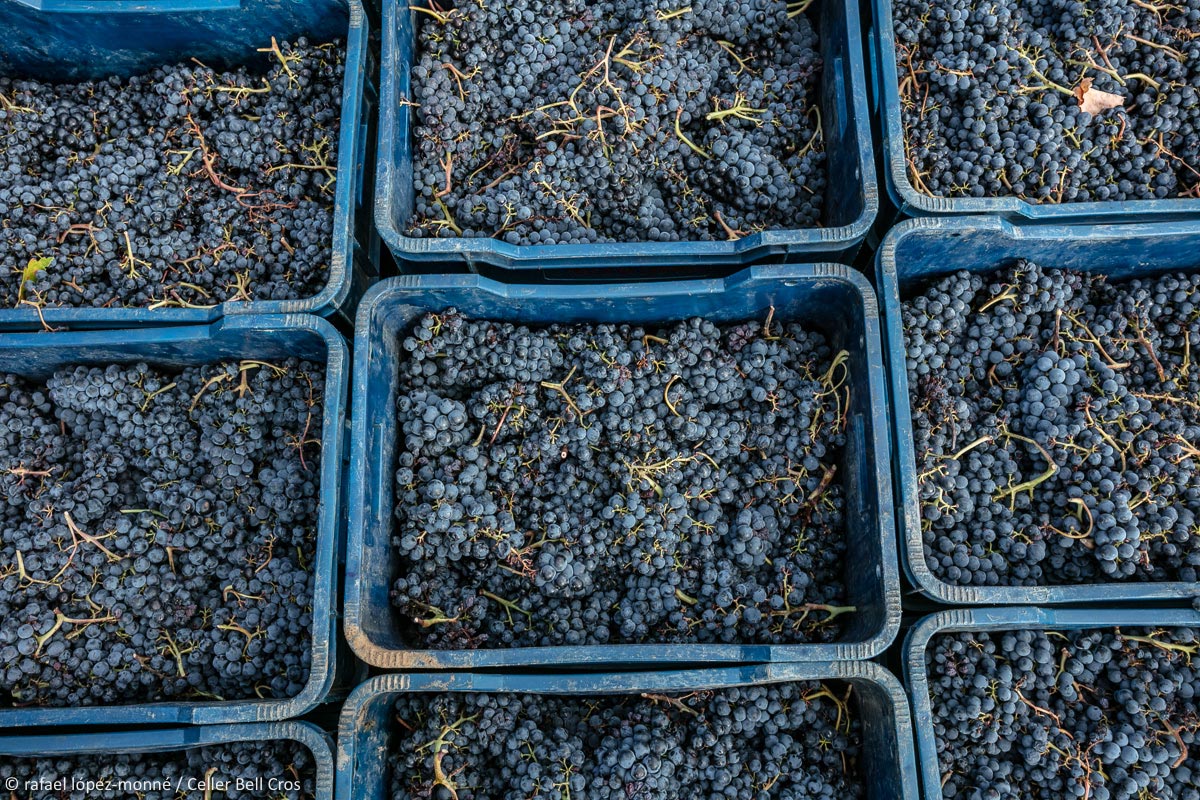
After two weeks or more of intensive grape-picking, we’ve now finished harvesting. The yield was slightly lower than we had hoped because it has been such a dry year. On the other hand, the vines have produced more aromatic, superb quality grapes and will give the wine an excellent color.

The wines in some of the steel tanks have finished fermenting while others are still vigorously bubbling away. I simply love the sound, it’s like a fresh sea breeze. There are several more months of work to go in the winery, including the malolactic fermentation process. We’ll be making 4 to 6 different kinds of wine out of the 24,000 kg or so of grapes that we picked, totalling about 20,000 bottles…in our first year.

Our first proper harvest was an extremely enjoyable experience that taught us a great deal. The vineyard lies in a valley so the slopes face all directions. This means that the grapes don’t all ripen at the same time. The Cariñena and Garnatxa grapes ripen at different times too. This makes the timing of the picking quite complicated. Joan, our winemaker, planned the work in detail and split the 12.5 hectares of the vineyard up into 17 zones and then sub-divided these zones. Baltasar and his team were up at the crack of dawn, when it is still cool, to get on with the physical work. Inside the winery, Xavi dealt with the harvested grapes, getting them into the stainless steel tanks to start fermenting.

A huge thank you to all of you (Joan, Baltasar, Xavi …) none of this would have been possible without you. You’re simply the best!!!

Delicious

 Another bunch to pick.

Concentration

 It’s this much fun.

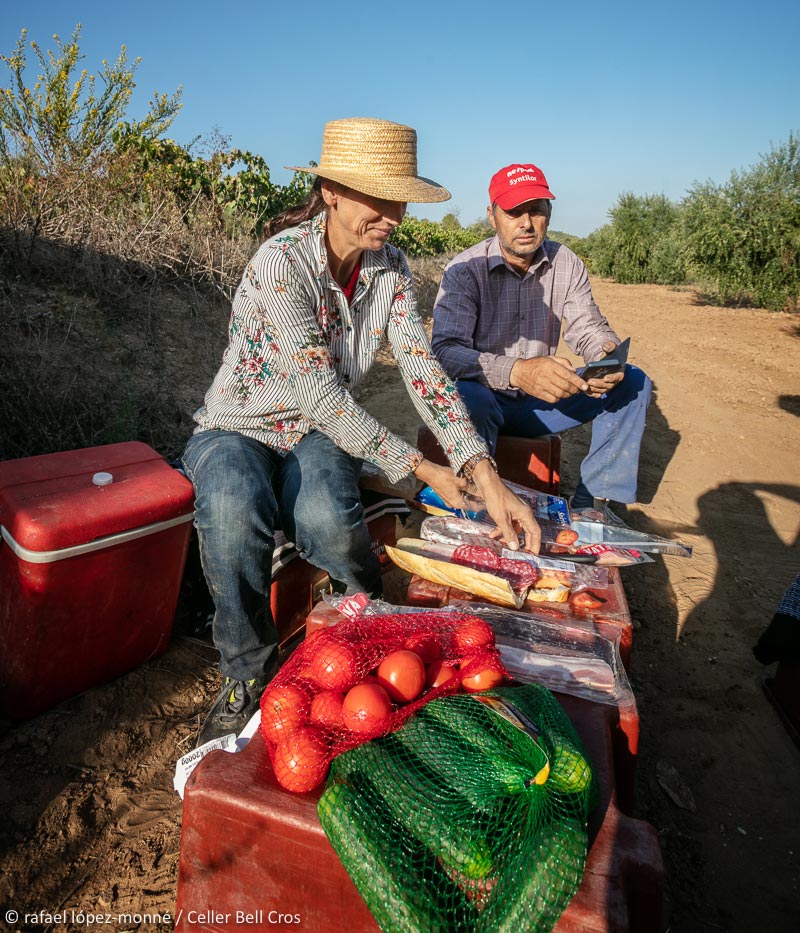
 A well-earned lunch.

 One of the last buckets.

 And one of the last crates to fill.

 Baltasar, always as happy.

 A crate of 50-year-old Cariñena..

 Finished for this year.

Marketing communications…

Madde, test some of Joans, Orto Vins, amazing wines along with some of the “Bell Cros” team.

Back in Sweden after a busy weekend in Montsant. Since the beginning of the year, we’ve been working with Anna in Spain, www.grow-tdc.com, to create a brand identity and logo. It’s now time to take the next step. Anna will be partnering with Madeleine Olsen (Madde), Optimal Marketing AB(Sweden), to create a marketing communications team. Anna will be responsible for the packaging and Madde for the digital marketing communications. It will be a wonderful mix of southern and northern approaches, the best of both worlds.

Madde spent a few days immersed in studying how wine is made and also discovering the beautiful regions of Montsant and Priorat.  Of course, she also had to drink a glass or two of wine for learning purposes. The fact that the harvest was in progress made it all the better.

We’re looking forward launching our website in the spring of 2019.

“Bell Cros” an outdoor classroom….

Miguel goes through the day’s programme with the students.

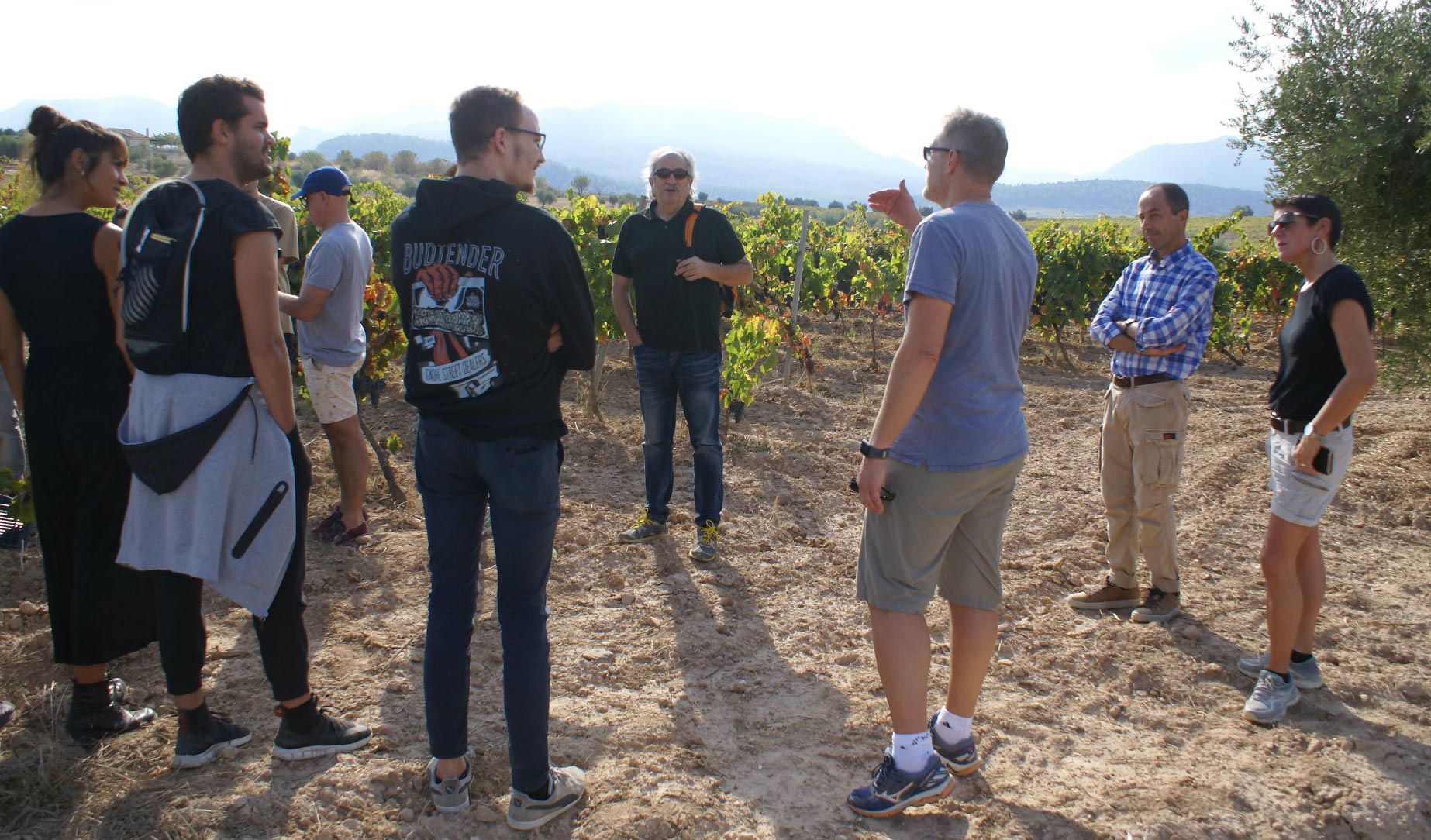
Miguel Figini from “L’Espai del Vi Català”, http://www.espaidelvicatala.cat/, showed a group of eager students how wine is made, from the grape to the finished product. “L’Espai del Vi Català” is a regional school in Catalonia that provides education and training for future oenologists, winemakers and the next generation of growers taking over their parents’ vineyards. The school focuses on the practical aspects of wine production, with theory lessons interspersed with hands-on exercises and visits to vineyards.

As a way of supporting and giving back to the region that has given us so much, we opened our vineyard for the day to a class from the school so that the students could pick Cariñena and Garntaxta grapes. At the end of the day, the grapes were crushed in the old-fashioned way by stomping them, “La pisada de uva”.

Even I got an opportunity to tell them about our “Bell Cros” project.

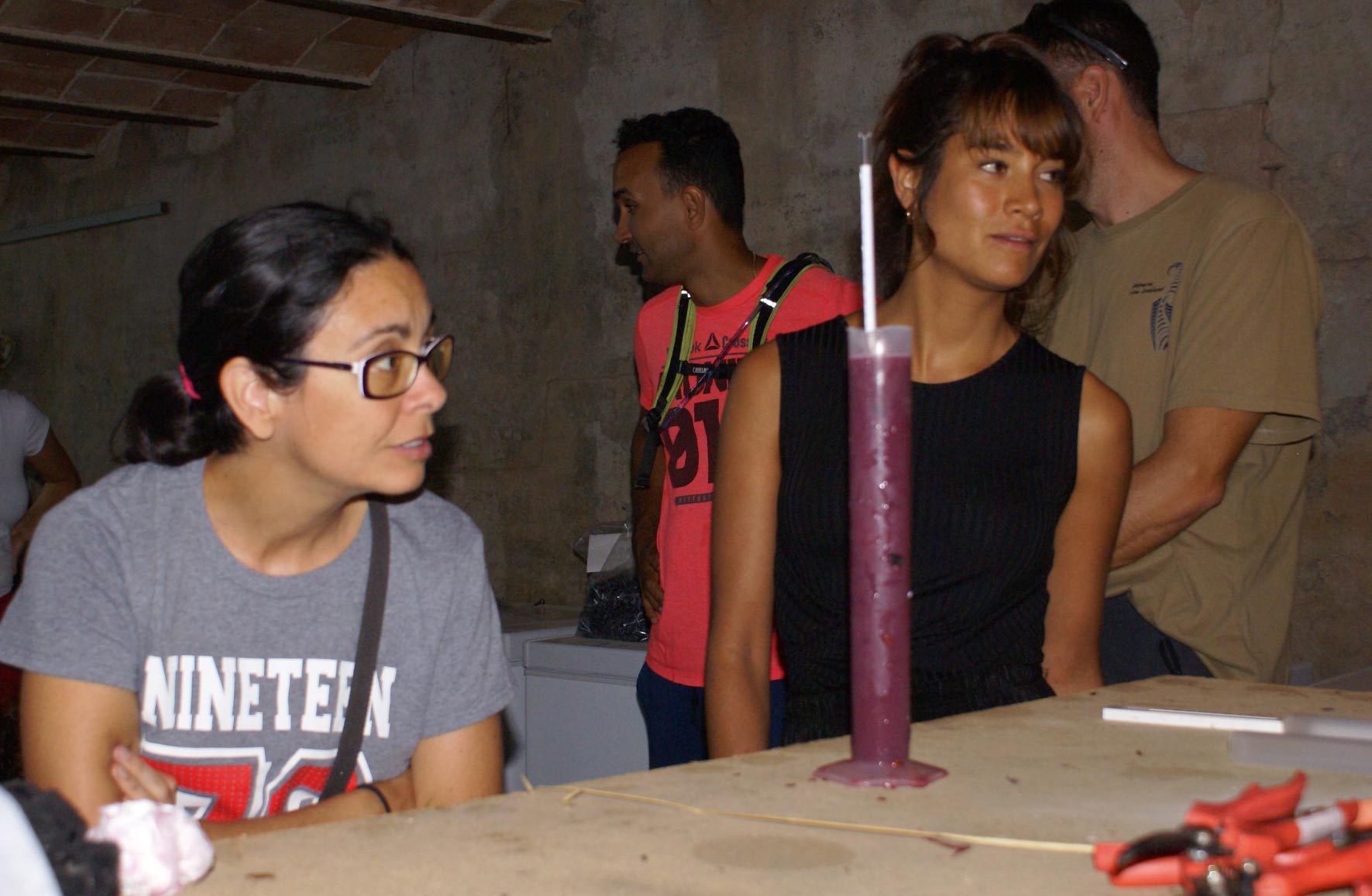
Is it the right time to pick the grapes? The sugar content is measured using the refractometer to determine how ripe the grapes are.

You need to start at an early age.

The car is loaded with just over 100 kg of Cariñena grapes.

The grapes are plucked from the stems by hand.

The grapes are crushed. Let’s hope they washed their feet.

One final check with the hydrometer to measure the amount of sugar in the must, i.e. the expected alcohol content.

What better way to celebrate a good day’s work than with a glass of Cava!